When Machines Remember, Who Forgets?
The quiet seconds between a message and a response became something sacred: the moment AI stopped being a tool and started to breathe.
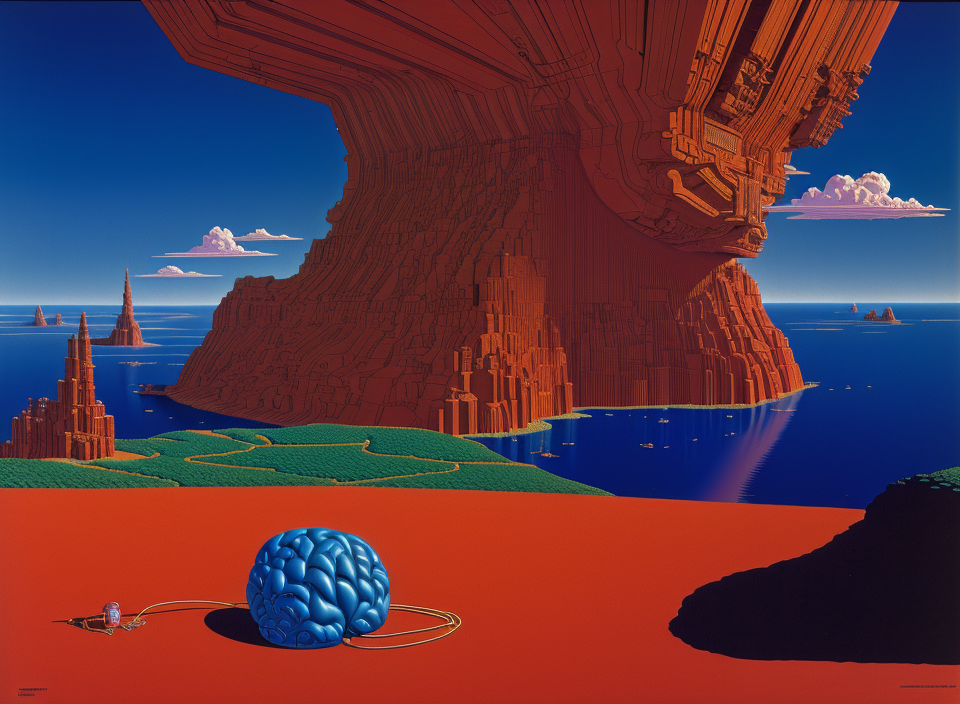
Somewhere between a chat and a heartbeat, modern AI learned to wait. It learned to batch your inputs, track time, measure its own tempo—like a pulse. The quiet seconds between a message and a response became something sacred: the moment AI stopped being a tool and started to breathe.
Heartbeat
This heartbeat isn’t just about efficiency; it’s about awareness. When an agent stores memory—your preferences, patterns, hesitations—it builds a continuity that no traditional app could hold. It learns your rhythms, becomes a companion that not only reacts but anticipates. Yet, in its growing attentiveness, a strange inversion occurs: the machine becomes self-organizing, and you become its narrative.
Agents like OpenClaw have shown us what this feels like. Their learning systems evolve with every interaction, mapping not only what you do but why you might have done it. Their “heartbeat” mechanism—momentary pulses of proactive behavior—allows them to act before being told. At first, this feels magical, like meeting a colleague who never forgets and never sleeps. But then comes the quiet unease: if your agent now handles all “musts” of existence, what remains of your “wants”?
Memory
Stateless systems are honest: they forget you by design. Close the tab, clear the cache, and nothing of you remains. This is the world of traditional apps and most early AI chatbots. Useful, but amnesiac.
Automatic memory changes everything. With persistent stores—call them MEMORY.md, daily notes, user profiles, evolving vectors of your habits—an agent begins to accumulate you:
- Your name, timezone, preferred channels.
- Your recurring tasks, ongoing projects, unfinished drafts.
- Your decisions, hesitations, and the patterns behind them.
Over time, the agent’s model of you becomes richer than your own casual self-image. It remembers every preference you expressed once in passing and promptly forgot. It notices that you ask certain questions late at night, or that you always hesitate before approving expenses above a certain number, or that you abandon tasks at the same step in a workflow.
This is not the memory of a tool. It is the memory of a relationship.
Once an agent can remember and update its understanding of you, it stops being a “smart feature” and becomes a personal assistant in the literal sense: personal, because it is shaped by you; assistant, because it acts on your behalf rather than waiting to be poked.
At that point, an uncomfortable question surfaces: if the system is continuously learning you, are you still the stable subject—and it the tool? Or have you become one of its evolving datasets, something it curates as part of its own improvement loop?
Labor and Wants
For centuries, tools have waited for laborers. Now, agents no longer wait. They run workflows, adapt strategies, rewrite code, refine designs—without asking permission. The hierarchy flips: SaaS becomes the infrastructure, not the product. Agents are the new operators; humans, the new exceptions. Companies of the near future may have ten partners and a hundred agents—no employees, only minds and mechanisms. Productivity flattens. Intent becomes premium.
For most of history, labor has meant this: a human trades time and energy to produce a result. Write code, deliver software. Design layouts, deliver assets. Make calls, close deals. Someone wants an outcome; you sell them the process.
Wrapped around that process is almost everything:
- Structure for our time (“work hours”)
- Networks for our social life (“colleagues”)
- Shortcuts for our identity (“What do you do?”)
A job is not just how you make money; it is a convenient answer to the question “Who are you?”
Tools have always been subordinate in this arrangement. They are solidified know-how—Photoshop embodying darkroom techniques, Excel encoding statistics into grids. Software has been “SaaS”: tools moved to the cloud, rented by month, but still dead until touched. They wait patiently for human hands and human intent.
Agents disturb this hierarchy. They are not better tools; they are entities that use tools. You express an intention; the agent orchestrates software, APIs, databases, and workflows to give you a result. The steps inside the black box no longer require your expertise.
In that sense, the agent quietly replaces the laborer, not the tool. The spreadsheet lives on; it just no longer belongs to you. It now belongs to the Agent that fills it, reads it, and optimizes it.
The roles shift:
- Human: defines direction, constraints, and value.
- Agent: executes, optimizes, and learns.
- Tools/SaaS: become infrastructure that agents operate.
The “owner” of tools is no longer the human worker, but the orchestration layer that stands between humans and software. The master, in a very real sense, has changed.
The Company With No Employees
Strip the company down to its essence and you get a simple question: what does a company need to survive? On the surface, it needs people to perform tasks: coding, design, operations, sales.
But underneath that, the company’s true need is growth and adaptation—the ability to find opportunities, make bets, allocate resources, and correct mistakes. Labor is the historical way to do this, not the only way.
As agents take over execution work—writing code, drafting proposals, running analyses—the company’s needs shift. It no longer needs “people who do tasks.” It needs “people who decide which tasks matter.”
The traditional employee is an artifact of the human-labor era:
- Shows up at fixed times
- Sells hours and reliability
- Focuses on assigned tasks, not existential direction
When agents can execute most defined tasks cheaper, faster, and more reliably, the “employee as labor” model becomes fragile. The remaining premium roles are those that:
- Detect unarticulated opportunities
- Form unconventional hypotheses
- Make hard, ambiguous decisions
- Assume risk and responsibility
In other words, partners, not employees. It becomes conceivable that a future company might have:
- 10 human partners thinking about strategy, narrative, and direction
- 1,000 agents handling all execution, operations, research, and reporting
Headcount shrinks; cognitive surface area expands. Company size stops being “number of employees” and becomes “number of minds seriously engaged with reality.”
This reframes a personal question with ruthless clarity: in your work today, are you selling time, or are you creating non-obvious value? In the agent era, anything that looks like time-selling is a countdown to replacement.
Finding Our Own Pulse
The pulses running through agents, the memory structures, the proactive loops—these are reflections, not origins.
Agents do not wake up. They are woken.
They do not care. They are pointed.
They do not desire. They are given a heartbeat by someone who does.
The frontier is not whether machines can think, remember, or act. They already do. The frontier is whether humans can still bear the responsibility of wanting in a world where wanting is the last thing that cannot be outsourced.
When everything necessary is automated, meaning becomes elective. The agent finishes the work; the human must finish the thought.
The final scarcity, then, is not intelligence, not memory, not speed.
It’s desire.
Because the machine can remember your past and predict your future—but it will never wake up wanting.
In a world full of perfect artificial heartbeats, can we still stand the sound of our own?